
Novi City Directory Holdings by Year
No complete Novi-only city-directory run exists. That gap shapes every search. Start with the holdings described here, then inspect each volume's title page, geographic coverage, and street or surname section before trusting it. Oakland County and Pontiac volumes supply leads. They cannot prove that every Novi address appears in every year. The local library rounds things out with tax rolls, newspapers, and maps that can test a Novi directory finding against other records.
| Collection | Years | Where Held | Access |
|---|---|---|---|
| Oakland County directories and officer volumes | 1947-48 through 1969-70 | Oakland County Historical Society, Pine Grove | Novi shelf-list lead; inspect the volume’s geography |
| Polk Pontiac directory volumes | 1950; 1952-54; 1956-57; 1960; 1962 | Oakland County Historical Society, Pine Grove | May include suburbs; Novi coverage is not guaranteed |
| Michigan State Gazetteer, Novi entry | 1863-64 sample | Library of Congress digitized PDF | Place, officials, postmaster, trades, and local context |
| Novi tax assessment rolls | 1844-1851, transcribed | Novi Public Library Local History Room | Early taxable-property and person context |
| Novi News and related local papers | See library runs by title | Novi Public Library archive and microfilm | Notices, obituaries, and dated household clues |
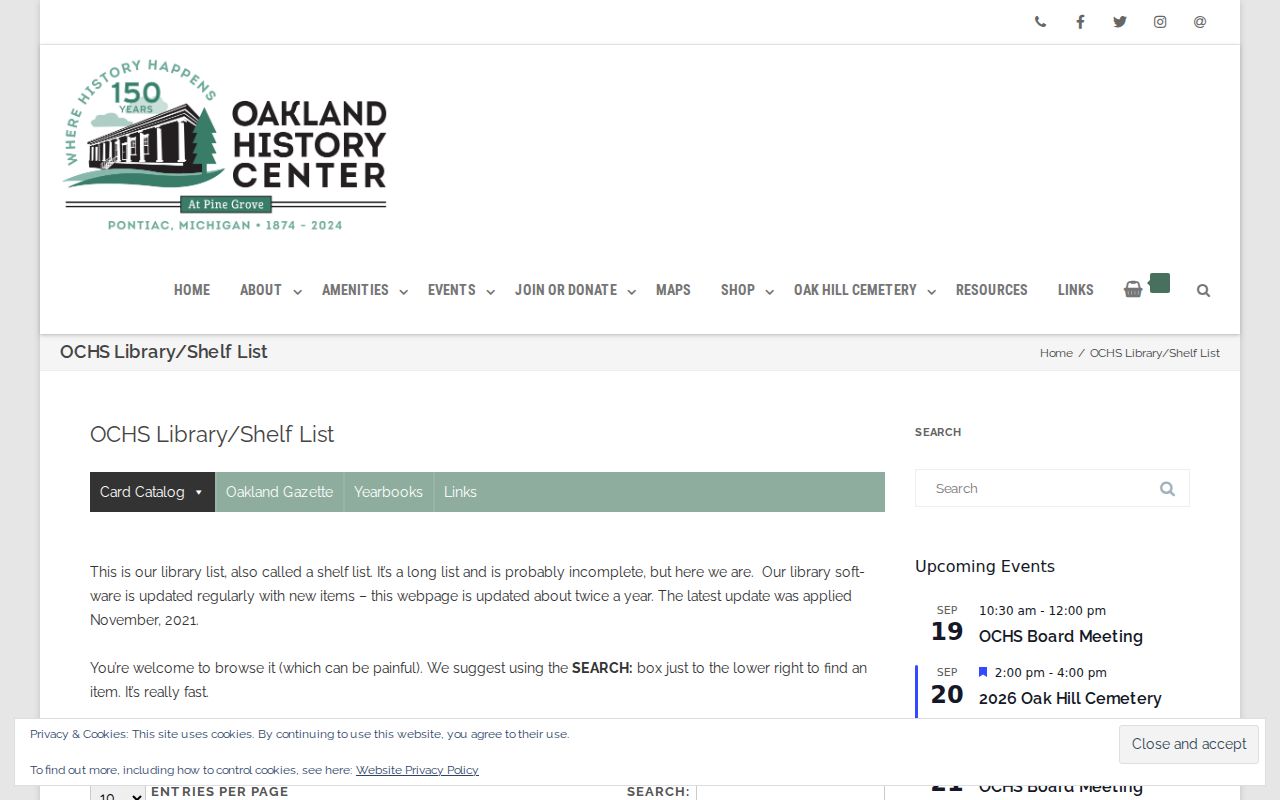
The Oakland County Historical Society shelf list is the confirmed lead for Novi county and Pontiac volumes. It is a holdings list, nothing more. It promises no Novi household entry. For statewide context on publishers and street indexes, consult the Library of Michigan city-directory guide. It also explains how volumes are arranged.
The Historical Society holdings page shows the shelf-list source behind these leads.
Use the entry list to pick a likely volume. Then confirm its municipal coverage before treating a name or address as a Novi result.
Novi Local History Room Sources
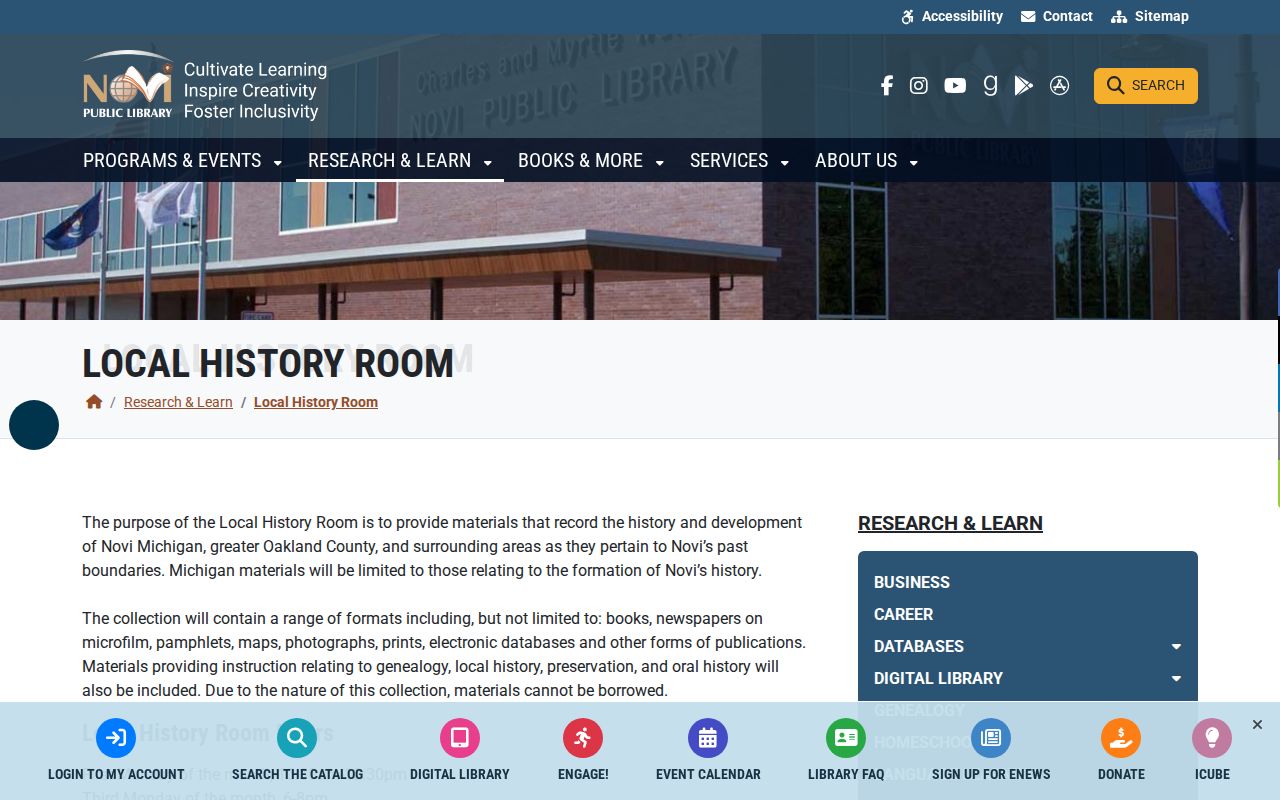
The Novi Public Library Local History Room is the main local starting point for older Novi names and places. The room sits on the second floor. Its material does not circulate. Its scope reaches beyond Novi. Books, pamphlets, maps, photographs, newspaper microfilm, electronic databases, and library publications sit alongside the print sources, so asking for a binder, box, or roll usually beats expecting one universal name search.
Hours are limited. The room lists first Mondays from 10:30 a.m. to 12:30 p.m. and third Mondays from 6 to 8 p.m., with July and August visits by appointment. Check the library page before traveling. The room's brochure identifies burial permits, maps, oral histories, photographs, school-board minutes, vertical files, Novi History Binders, cemetery material, and transcribed 1844-1851 tax assessment rolls. Those sources add real depth.
The Local History Room page names the room, its current visiting details, and its local-research role.
A single visit can work small wonders. A name from a printed volume links to tax rolls, maps, or oral-history material held in the same local collection. Plan for a return trip.
Note: Older local material is often physical, so availability depends on the room, the particular box or reel, and current access conditions.
Novi Directory Entries Decoded
Read a Novi entry as a dated statement. It is not a biography. The Library of Michigan notes that city directories can identify a head of household or family, a street address, a recorded trade or affiliation, an ownership or renter notation, and classified sections. Polk surname pages can add household and ownership clues. A telephone book usually names only the head subscriber. A street index, arranged by house number, can point from an address back to an occupant.
| Name | Usually the listed head of household; initials and surname spelling should be copied exactly. |
|---|---|
| Spouse or relationship note | May appear in parentheses or a widow notation, which is a lead to verify elsewhere. |
| Recorded trade or affiliation | A contemporaneous identification clue, not proof of a later address. |
| Street address | The printed house number and street form for that volume, which may differ from today’s format. |
| Owner or renter mark | Some runs use a notation that should be checked against that volume’s abbreviation key. |
- Criss-cross directory
- An address-first directory section that lists a street alphabetically and then houses by number, useful when a surname is uncertain.
- Householder index
- A name-organized listing of the person or household chosen by that volume’s publisher, not necessarily every person at an address.
- Abbreviation key
- The explanatory legend in the front matter. Photograph or transcribe it before interpreting symbols such as owner, renter, or widow.
A reverse or criss-cross section helps most when a Novi surname was misspelled. The surname may fail, but the street still works. Novi has no verified complete reverse-directory run, so use county or Pontiac holdings, library microfilm, and licensed collections as leads. Mark the gap when a volume skips Novi.
Novi Gazetteer Before Household Rolls
The 1863-64 Michigan State Gazetteer gives a real Novi entry. It is a gazetteer, though, not a household roll. It names the Novi place, its township and post-office setting, churches, store and shop references, population, mail service, the postmaster, officials, and several trades. That mix is typical for its era. Not every family appears in it.
The Novi postmaster was J. J. Perkins. Officials included supervisor John C. Emery, clerk Benjamin J. Smith, and treasurer Edwin Hazin. Listed trades cover a blacksmith, carriage maker, tailor, and cooper. It is a genuine place-and-person snapshot. It cannot establish that an absent name did not live in Novi, and it should not be treated as a modern household roll.
Novi Newspaper and Yearbook Runs
Printed volumes leave gaps. Novi newspapers and school publications fill many of them. The library brochure documents Novi News holdings for 1955-1958, 1960-1969, 1971-1972, and 1978-2017. Microfilm extends the reach further. Novi Walled Lake News runs from January 1980 through April 1984, the Northville Record covers 1869 through 1955 with indexes for 1869-1879 and 1888-1899, and Detroit News film spans 1979-1992. Together these runs bracket eras where a city directory volume may be thin or absent.
The Novi News Archive notice says the archive is temporarily unavailable. That is an availability limit, nothing more. It does not mean the newspaper never ran or that past residents of Novi went unrecorded. Novi High yearbook runs, from 1973-1974 through selected years ending in 2012, work the same way as companions to the residents directory. A yearbook can confirm a name, class, activity, or portrait at a historical point. It cannot establish a current Novi address.
Note: Treat every newspaper announcement or yearbook image as a dated clue to be checked against a directory, census, deed, or other independent record.
Novi Township and City Geography
Geography shapes every historical Novi name search. Before Novi organized as a city, a resident may appear under Novi Township instead. Walled Lake, Northville, and adjoining townships also show up as postal or directory neighbors. Write down the municipality exactly as the source gives it. Converting an old label to a modern one can quietly break a paper trail.
Street-name history matters just as much. The Novi master street-name list reconciles city, county, postal, GIS, and original-plat variants of the same street. A family can stay put in the same house. But the spelling, street form, or municipal description may shift around it. This Novi geographic check helps confirm that a doubtful match is really the same household.
Novi Household Trail by Year
Follow a Novi household with three anchors. These are the year, the address, and the source's exact wording. Work from the street index first when the address is known. Then compare the surname section. Several institutions hold the historical volumes. Modern address-record searching belongs on the Novi Street Directory page. Keep directory evidence separate from ownership evidence and census enumeration.
- Find the closest available directory year and record the address, abbreviation key, initials, spouse notation, and any owner or renter mark.
- Check the nearest earlier and later volumes for an address, spelling, municipality, or relationship change.
- Use the criss-cross section, if present, to test the address and note whether surrounding house numbers follow the same street form.
- Pair the entry with the nearest public federal census. The latest public decennial census is 1950 under the 72-year release rule.
- Test a move, death, or inheritance clue with a deed, probate file, obituary, cemetery record, or building permit.
A Novi disappearance can mean many things. A move, a changed name, a different publisher's selection rules, a missing volume, or an unlisted household all look identical on the shelf. State only what each dated source actually says. For a modern identity question, move from the historical city directory evidence to a separate current-record check rather than assuming continuity.
Novi Historical Record Custody
Novi's older records were never wiped out by a single disaster. They simply live in different places. Oakland County deed books and general indexes reach back to the early nineteenth century, and you can explore them through the FamilySearch Oakland catalog. Transcribed local tax rolls cover 1844 through 1851. Probate material goes back even further, to 1822, per county court guidance. Statewide vital registration did not start until 1867. Because each record group was created for its own purpose, name coverage is uneven across the collections.
A practical research chain follows from this spread. Start at the local library for context, then try the historical society for directory holdings. County and FamilySearch sources handle land records. Archives cover the wider record groups. The Novi library genealogy page points visitors to FamilySearch Affiliate resources, the Burton Historical Collection, Michiganology, NARA-related resources, and Oakland County material. Access rights and image availability vary by collection, so plan around that.
Novi Digitization and Archive Gaps
Digitization keeps growing, but Novi history is still not one finished online archive. The library's computer catalog begins in 1992, and much older local material remains physical. Historical Commission and library reports describe digitized Novi News material. It is held during a storage transition. A newer Novi Special exhibit sits alongside it. Before relying on a digital item, confirm the current host and its citation information.
The library genealogy page provides the route to local and partner research resources.
Use a Novi online finding aid to identify a collection. Then confirm whether the relevant volume, image, or database requires an onsite visit or a library-licensed session.